With Gratitude
In 34 classrooms across Vermont and New Hampshire.
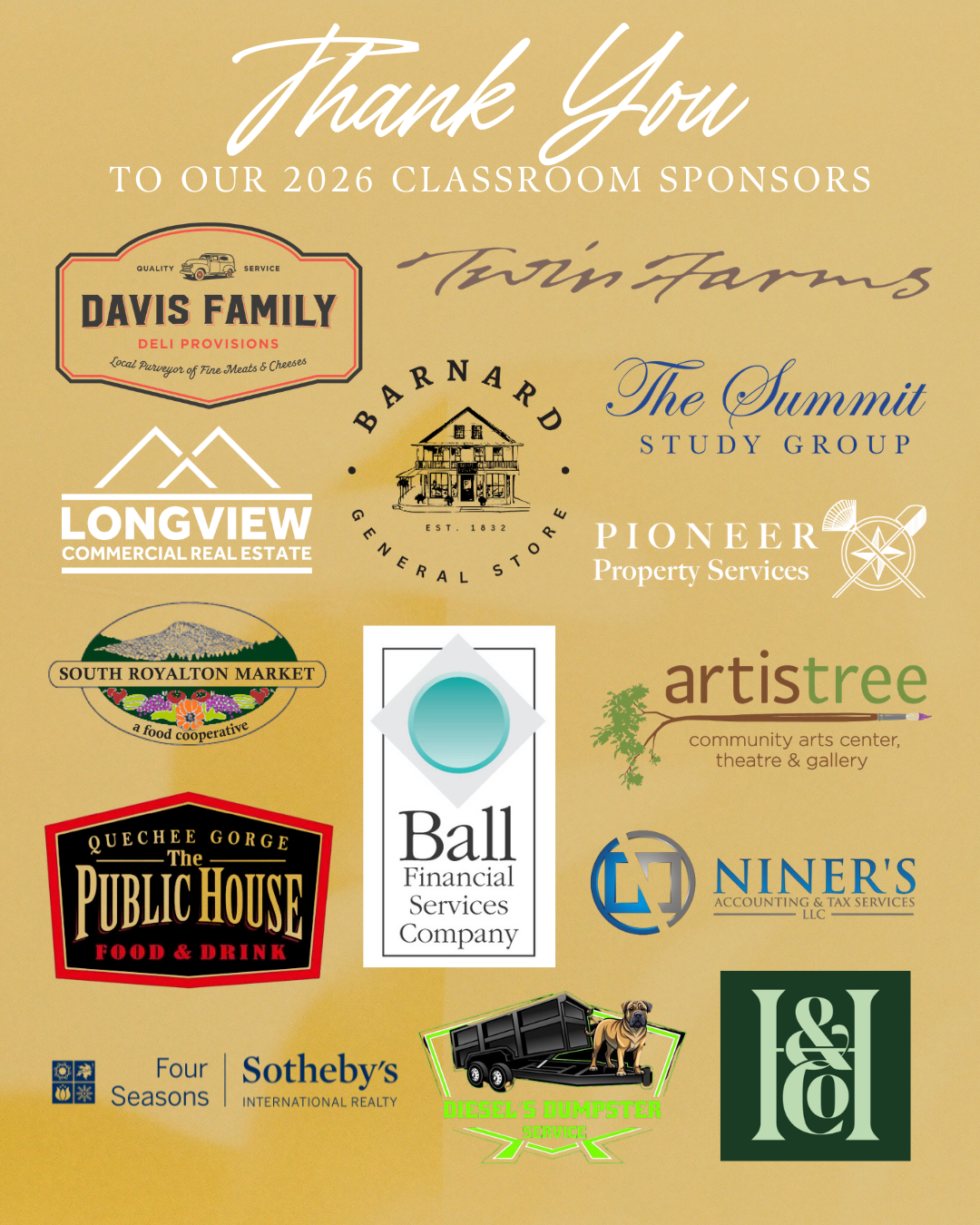
Aldo's Classroom Economy reaches these students thanks to the generosity of the local businesses and community partners below.
Your students earn paychecks, pay rent, file insurance claims, and make real spending decisions — in a real economy they built together. You facilitate. They do the work. That's the point.
Dear Educator,
I am not a teacher. I want to get that out of the way right up front because I think it matters. I am a shopkeeper. I have spent my career creating systems that keep a business running smoothly and I brought that same thinking to this product. I have owned and operated a general store in a small Vermont town for over a decade, since buying it at 24 years old. Over those years, I have hired and trained countless young people. I have seen smart kids freeze at simple math at the register. I have seen the way this generation is lost when it comes to basic financial skills. I have seen the way smart phones are quickly chipping away at attention span and work ethic. I am on a mission to change these things.
That is why I created Aldo's Allowance Academy. It started as a home curriculum to help parents teach their kids about real money using a real allowance. But there is one thing a kitchen table cannot replicate: a community. In a classroom, kids watch each other make different choices with the same paycheck. They see what happens when someone saves and someone spends. They experience bills, unexpected expenses, and generosity alongside 25 other people who are figuring it out at the same time. That is something only a classroom can do. That is why I built this for you.
This classroom economy was strategically designed to create a positive association with money. There are no fines. There is no punishment tied to the economy. Students will make mistakes and learn from them, but the economy should never be used to discipline bad behavior. If it is, kids walk away with a negative relationship with money, and that is the opposite of what we are trying to do. I built it as a framework that teaches kids the habits and skills that make someone good with money: showing up, keeping commitments, tracking what you have, making intentional choices, and understanding that your decisions have consequences. The students run the economy. The student bankers handle payroll. The students maintain their own records. You supervise, facilitate a few key moments, and watch your students learn by doing.
I purposely built this system with the idea that teachers should not have to spend their own money on anything. There is no weekly store filled with dollar-store junk like every other classroom economy out there. This system will make a difference in your students' lives, without costing you anything. That's the point.
Thank you for being willing to try something new. Thank you for caring enough about your students to bring real-world skills into your classroom. And thank you for doing a job that I know is harder than most people will ever understand.
Students build and run a real economy throughout the entire school year. Every component connects to the next. Every lesson comes from living it.
Each student identifies a classroom need and proposes a job they'll fill all year. The class votes. Essential roles get assigned. Everyone contributes — and everyone earns.
Student bankers run payroll every two weeks. Each paycheck shows gross pay, a 10% tax deduction, and net pay in Aldo's Allowance. Kids see where the money goes before they touch it — exactly like the real thing.
Monthly rent and insurance premiums are due whether kids are ready or not. If they spent everything, they're short. That's a lesson no worksheet can teach.
Students who deposit into the classroom bank earn interest. Kids who can see their balance grow are kids who understand why saving matters before someone else has to tell them.
Monthly Free Flight Days give students something to look forward to and spend toward. The Nest Sale — a year-end auction — is the moment that rewards every student who saved. Delayed gratification made real.
Students give to each other — not to outside causes. That act of giving builds something you can't manufacture: a classroom community where kids actually look out for one another.
Month-by-month setup, payday scripts, event guides, and timing schedules. Everything you need, in order.
Every form, ledger, job card, and worksheet — with copyright permission to photocopy for your classroom.
Designed to look professional, not like play money. Business-card size for easy handling.
A set of gig opportunities students can take on for extra earnings outside their regular jobs.
Visual anchors for the classroom economy.
Every kit includes a few extras to help you launch, teach, and run the economy with confidence.
Students run the economy. Bankers handle payroll. Kids maintain their own ledgers. You supervise — you don't manage every transaction.
No fines, ever. This is not a behavior system. Aldo's Classroom Economy is pure financial literacy — earning, budgeting, saving, spending, giving.
Physical money by design. Kids count it, hold it, and make decisions with it in their hands. That's why the brand exists.
Aligns with national financial literacy standards including JumpStart and CEE benchmarks. Supporting alignment documentation included in the teacher guide.
School-ready pricing and invoicing available for purchase orders. Contact Jillian directly for district orders.
Kits ship complete and ready for a September launch. School purchase orders welcome — contact Jillian directly for invoicing.
Questions about purchase orders, district pricing, or sponsorship? Reach out directly.
The 2027 school year will be here before you know it. Join the interest list and you'll be the first to hear when enrollment opens, along with early planning details for your classroom.
Local businesses and community sponsors are a natural fit for this program. When you sponsor a classroom kit, you're putting financial literacy directly in the hands of kids in your community, and your name is part of that experience.
There's no advertising inside the curriculum. Instead, a thank-you letter goes home to every family, and you're recognized by Aldo's Allowance Academy as the sponsor who made it possible. That's real community visibility, not a logo on a banner nobody reads.
Get in Touch About Sponsorship →Insurance agencies, accounting firms, real estate offices, and local businesses that want to do something meaningful in their community. If your business touches money in any way, this is your program.
Aldo's Classroom Economy reaches these students thanks to the generosity of the local businesses and community partners below.